Envelope sealers
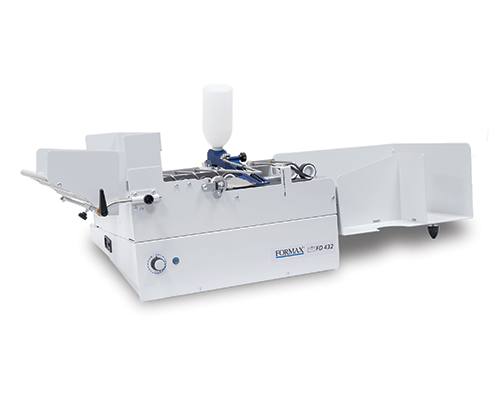
Seal envelope flaps at machine speed with consistent moisture, so flaps stay shut in the mail stream and nobody spends the afternoon with a sponge.
Who it is for
- Mailrooms and in-plant mail centers
- Nonprofits sending appeals
- Mail houses sealing hand-inserted work
What it fixes
- Sealing flaps by hand
- Envelopes popping open in the mail stream
- Slow going on big mailings
What we will ask you
Have these answers ready and the first conversation gets you a configuration and a quote, not a brochure.
- How many envelopes a month?
- Sizes and flap styles?
- Stuffed by hand or by machine?
- Does it feed a stamp affixer or meter afterward?
How to choose
- Flap styles and sizes: match the sealer to your envelopes, including square flaps and deep flaps.
- Moisture control: consistent moistening keeps flaps shut without wrinkling or wet envelopes.
- Feeding: hand-stuffed work needs reliable separation; sealers often feed a stamp affixer or meter next.
- Volume: tabletop sealers for mailrooms, inline sealers for production lines.
Common questions
It is a small job for us. Is a sealer worth it?
Even a few thousand envelopes a week add up to real labor over a year. A sealer gives those hours back.
Can it feed our stamp affixer?
Yes. Inline sealers run ahead of stamp affixers and addressing on a base; tabletop sealers work on their own.
Often paired with
Supplies it runs on
Tell us about the job
Answer what you can from the questions above, or just describe the work. A person reads every request and gets back to you. Prices are by quote, because every machine is configured to the pieces it runs.
On-site installation, training and service in New York, New Jersey, Connecticut, Pennsylvania and Delaware. Equipment and supplies ship nationwide and into Canada.
Who we serve: Companies that mail from in house, Universities, nonprofits and associations.