Inkjet addressing equipment
Print addresses, Intelligent Mail barcodes and variable data straight onto envelopes, postcards, flats and self-mailers at line speed. No labels, no outside addressing service, and rush jobs stay in your shop.
Who it is for
- Mail houses and lettershops addressing for clients
- Commercial printers adding mailing services
- Nonprofits and in-plant mail centers doing their own addressing
- Shops replacing labels, or an older inkjet that no longer prints barcodes cleanly
What it fixes
- Paying for labels, or paying an outside service to address
- Waiting on a vendor's turnaround for every mailing
- An older printer that cannot keep up or print barcodes the post office can read
- Coated and glossy stock that smears
What we will ask you
Have these answers ready and the first conversation gets you a configuration and a quote, not a brochure.
- How many pieces a week, and how many on your busiest day?
- Labels today, an older inkjet, or an outside service?
- What stock do you run: uncoated, coated, glossy or plastic?
- Does it need to run in line with an inserter, tabber or labeler?
How to choose
- Ink first: aqueous for uncoated stock, solvent or UV for coated, glossy and plastic. The stock you run decides the print system more than anything else.
- Volume and pieces next: a tabletop address printer suits office and small-shop runs, while a base-driven line with a friction feeder handles daily production, thicker pieces and wider print.
- Print width: one head covers a typical address block and barcode; wider arrays add return addresses, personalization and 2-up work.
- Plan the line: drying or UV curing, a conveyor or stacker, and whether the printer feeds an inserter or tabber downstream.
Complete system
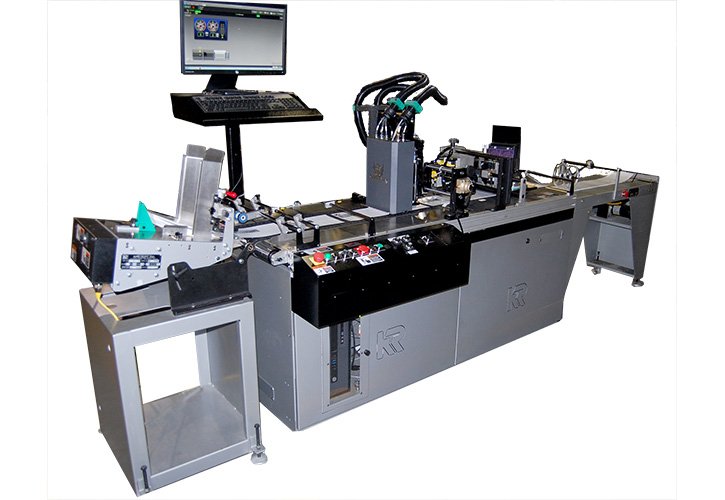
Kirk-Rudy Inkjet Addressing Line
Friction feeder, VFD transport base, inkjet print system and shingle conveyor: the standard base-driven addressing line for addresses, barcodes and variable data.
Machines for this job
From Kirk-Rudy, Formax, Rena and XiJet. Sold new, installed and serviced by our own technicians.
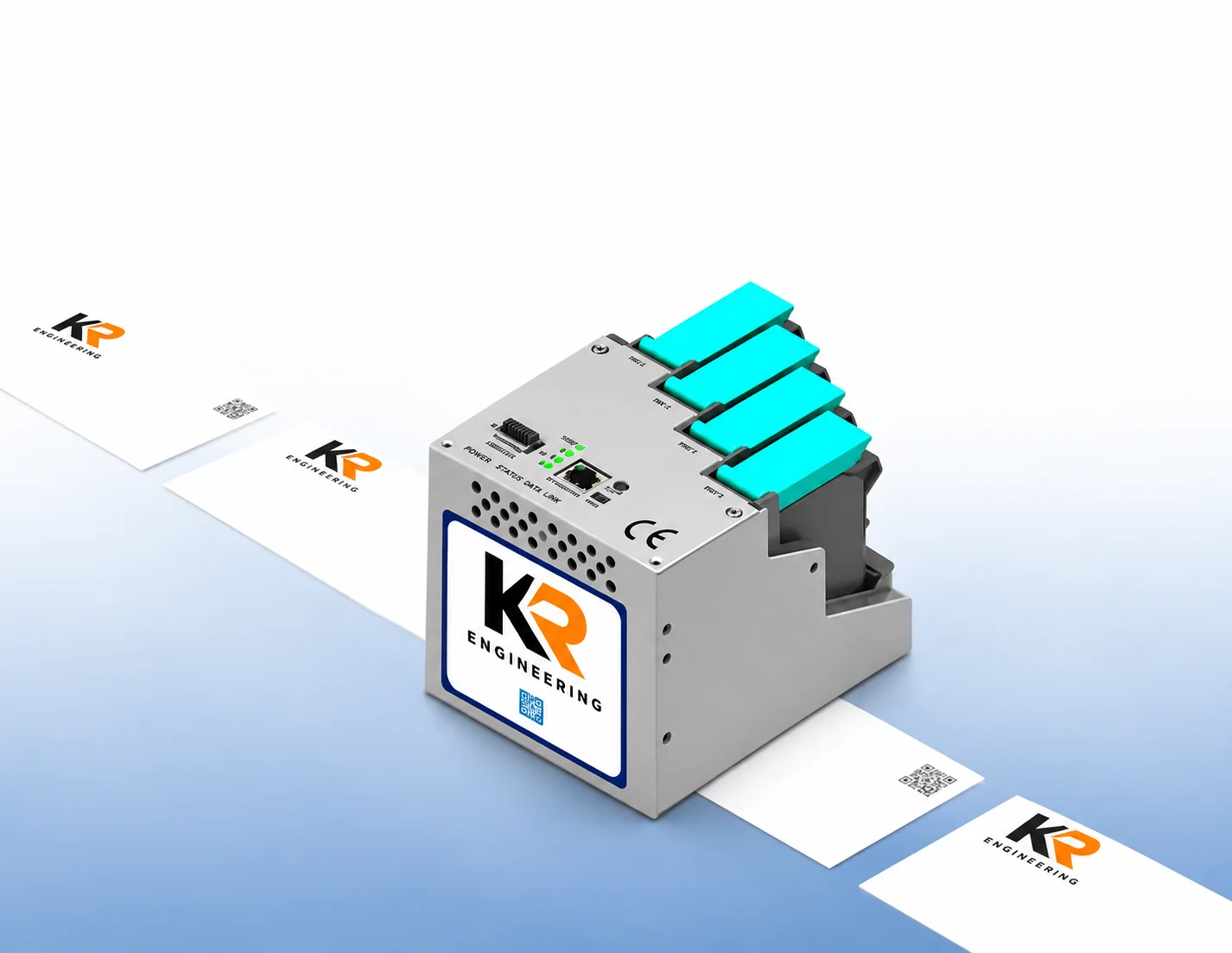
 Kirk-Rudy Phoenix 4.25 in Inkjet System, Single Head
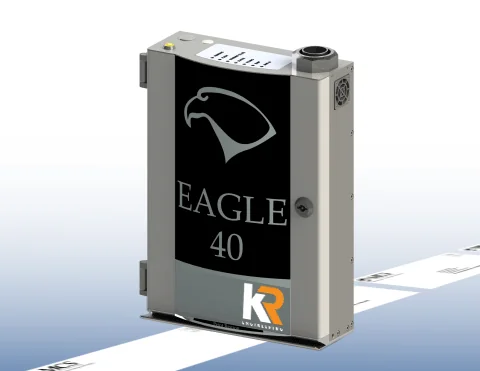 Kirk-Rudy Eagle 40 Inkjet System
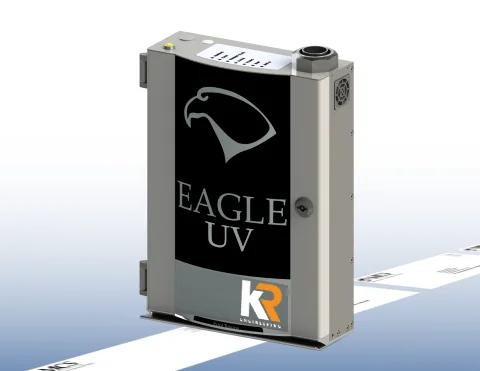 Kirk-Rudy Eagle UV Inkjet System
 Kirk-Rudy Falcon Inkjet System
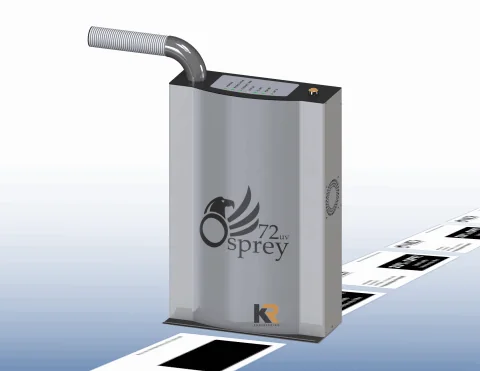 Kirk-Rudy Osprey UV Inkjet System
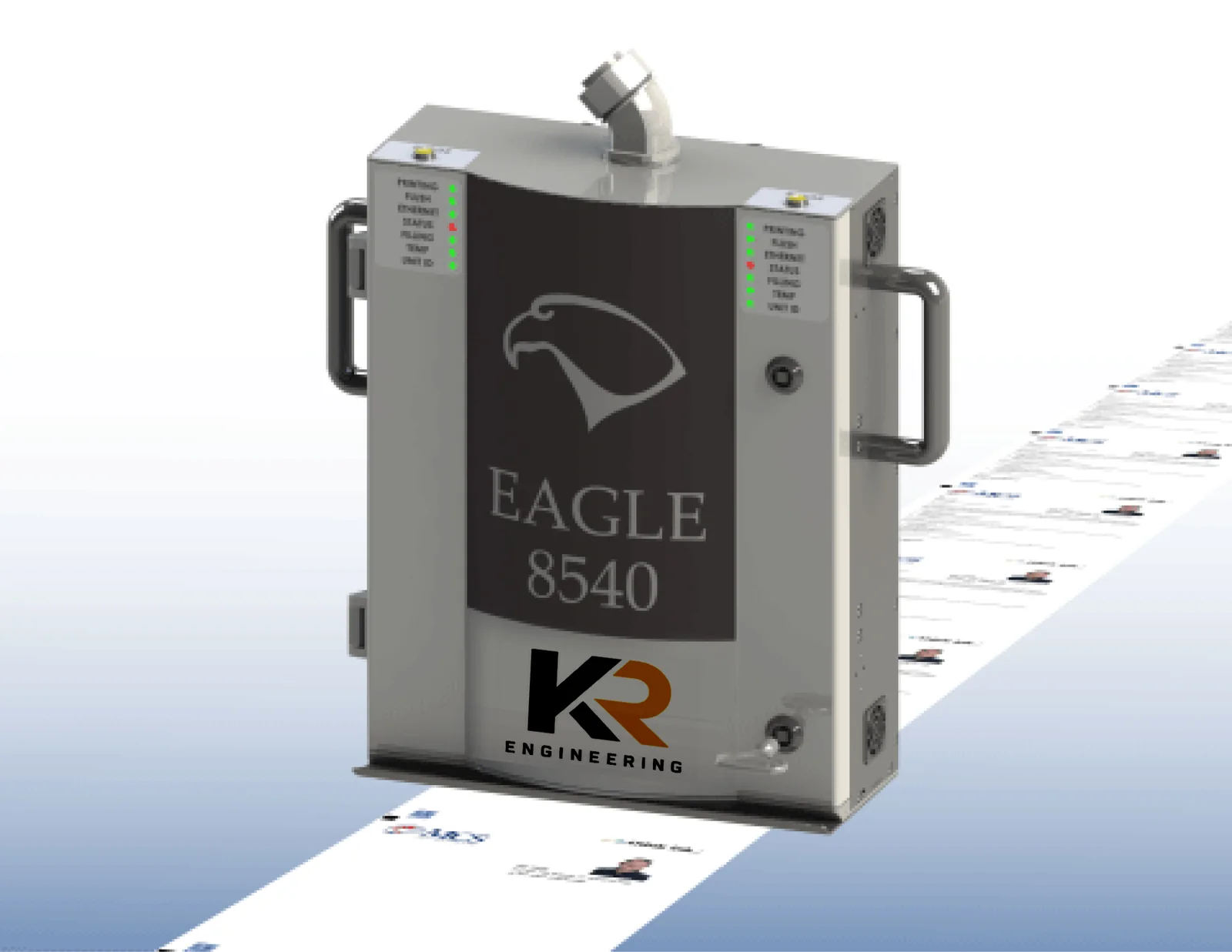 Kirk-Rudy Eagle 8540 Wide Inkjet System
- Kirk-Rudy UV LED Curing System, 12W
- Kirk-Rudy G4 UV Printing System
- Kirk-Rudy LED UV Curing System
- Kirk-Rudy UV LED Curing Unit, 4.75 in
- Formax AP2 Address Printer
- Formax AP3 Address Printer
- Formax AP4 Address Printer
- Rena AS-150 Small Media Inkjet Printer
- Rena AS-450 Inkjet Envelope Printer
- Rena AS-650 Inkjet Envelope Printer
- Rena AS-850 Inline Inkjet Printer
- Rena XPS ProMail Monochrome Inkjet Printer
- XiJet AJAX (Extended Throw)
- XiJet Aries
- XiJet Aries C
- XiJet FN Series
- XiJet Galaxy
- XiJet Gemini
- XiJet Gemini C
- XiJet Juno
- XiJet NP45 Series (HP)
- XiJet Taurus
- XiJet Taurus C
Compare the specifications
Manufacturers' published figures. Tell us your pieces and we confirm the fit.
| Model | Speed | Largest piece | Thickness |
|---|---|---|---|
| Formax AP2 Address Printer | Up to 22,000 #10 envelopes/hour | 13.5 x 15 in | up to 0.25 in |
| Formax AP3 Address Printer | Up to 26,000 #10 envelopes/hour | 13.5 x 15 in | up to 0.375 in |
| Formax AP4 Address Printer | Up to 26,000 #10 envelopes/hour | 15 x 50 in | up to 0.5 in |
| Kirk-Rudy Eagle 40 Inkjet System | #10 envelopes per hour: 21,000 at 600 x 600 dpi, 32,000 at 600 x 400, 43,000 at 600 x 300, 65,000 at 600 x 200 | Print area 4.25 to 34 in | Ask us |
| Kirk-Rudy Eagle 8540 Wide Inkjet System | Up to 667 fpm; 2-up letters/hr: 38,000 at 600 dpi, 76,000 at 300; up to 159,000 self-mailers/hr | Print area up to 34 in | Ask us |
| Kirk-Rudy Eagle UV Inkjet System | #10 envelopes per hour: 21,000 at 600 dpi to 65,000 at 200 | Print area 4 to 34 in | Ask us |
| Kirk-Rudy Falcon Inkjet System | #10 envelopes per hour: 8,000 at 600 x 600 dpi, 12,000 at 600 x 400, 16,000 at 600 x 300, 24,000 at 600 x 200 | Print area 2 to 34 in | Ask us |
| Kirk-Rudy Harrier Process Color Inkjet System | Up to 600 fpm | Print width 4.25, 8.5 or 12.75 in | Ask us |
| Kirk-Rudy Osprey UV Inkjet System | #10 envelopes per hour: Osprey 26 16,000 to 32,000, Osprey 72 10,000 to 21,000 | Print area 2.5 to 34 in | Ask us |
| Rena AS-150 Small Media Inkjet Printer | Up to 7,500 coin/seed packets per hour | 6.5 x 9.5 in | up to 0.02 in |
| Rena AS-450 Inkjet Envelope Printer | Up to 22,000 #10 envelopes per hour; up to 30,000 postcards per hour | 13.5 x 15 in | up to 0.25 in |
| Rena AS-650 Inkjet Envelope Printer | Up to 26,000 #10 envelopes per hour; up to 34,000 postcards per hour | 13.5 x 17 in | up to 0.375 in |
| Rena AS-850 Inline Inkjet Printer | Up to 26,000 #10 envelopes per hour; up to 34,000 postcards per hour | 15 x 50 in | up to 0.5 in |
Common questions
We outsource addressing and it works. Why bring it in house?
In house, you set the turnaround and can take the rush jobs you turn down today. Send us your annual volume and we will help you compare the two.
Our coated stock smears. Is inkjet still an option?
Yes, with the right ink. Aqueous ink suits uncoated stock, while solvent and UV inks cover coated, glossy and plastic. Dryers or UV curing set the ink in line so pieces stack clean.
Will it work with the equipment we already have?
Usually. Print heads mount on a transport base fed by a friction feeder, and the line can deliver to an inserter, tabber or stacker. Tell us what is on your floor and we will configure around it.
Often paired with
Supplies it runs on
Tell us about the job
Answer what you can from the questions above, or just describe the work. A person reads every request and gets back to you. Prices are by quote, because every machine is configured to the pieces it runs.
On-site installation, training and service in New York, New Jersey, Connecticut, Pennsylvania and Delaware. Equipment and supplies ship nationwide and into Canada.
Who we serve: Mail houses, lettershops and presort, Commercial and in-plant printers, Companies that mail from in house.